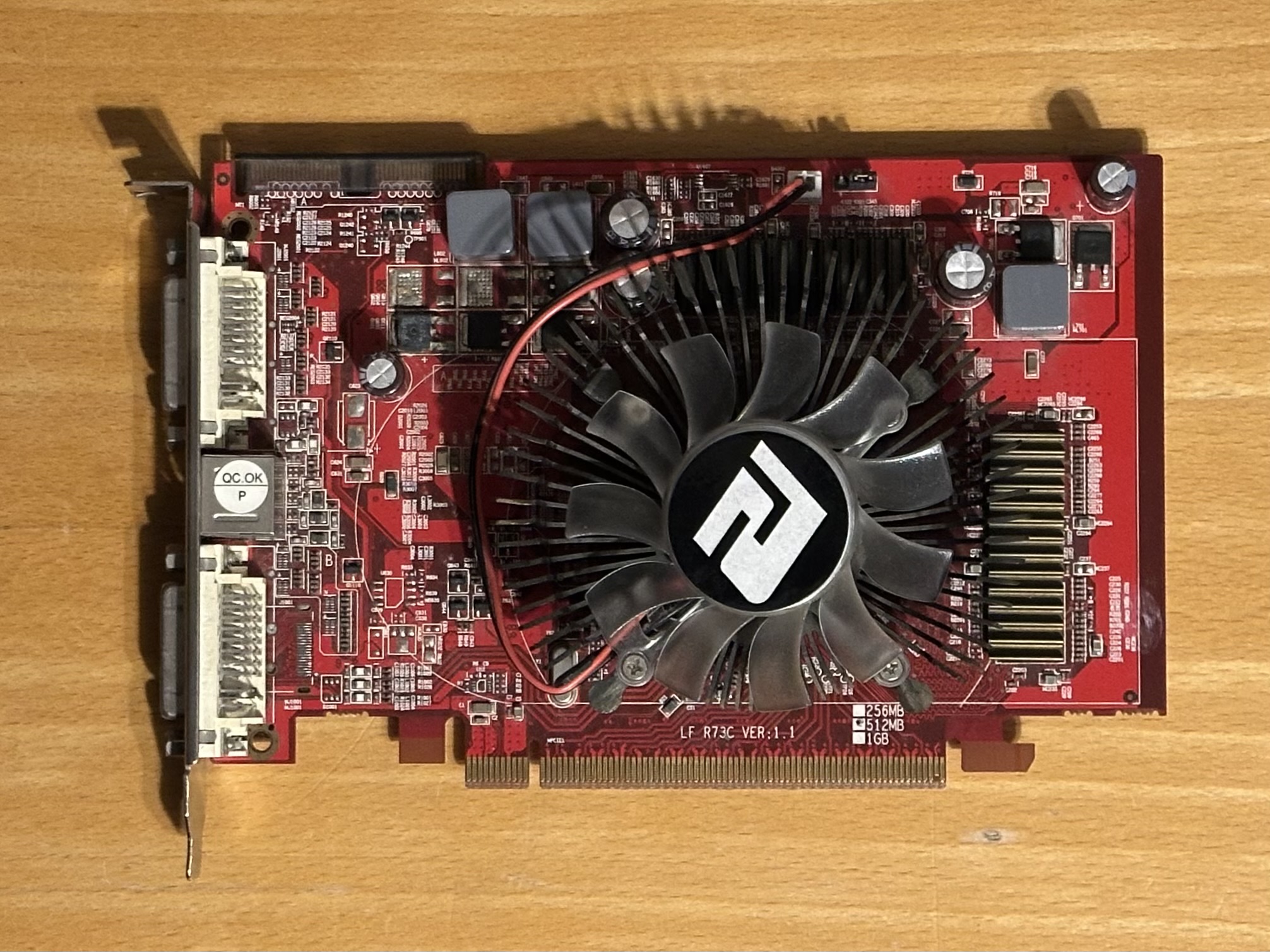
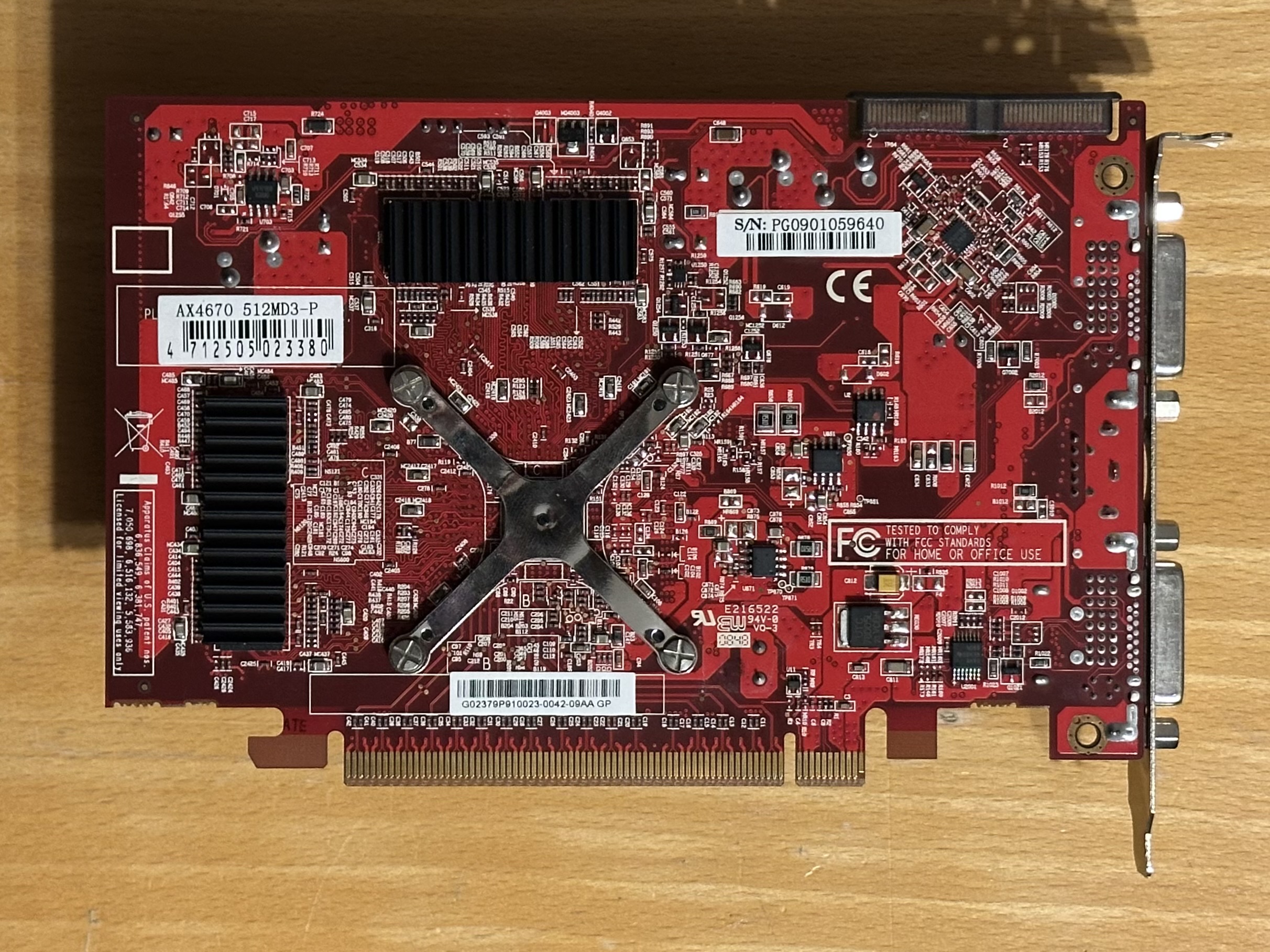
The ATI Radeon HD 4670 is a late-2000s PCI Express graphics card based on ATI’s RV730 GPU, released during the DirectX 10.1 era and positioned as a highly efficient mid-range option. Built by ATI (and sold both before and shortly after the AMD acquisition), the HD 4670 typically features 320 stream processors, a 128-bit memory bus, and 512 MB or 1 GB of GDDR3 or GDDR4 memory. While it was never marketed as a flagship, it delivered excellent real-world performance for its class, often rivaling higher-end cards while consuming far less power.
In a retro-hardware context, the Radeon HD 4670 shines as an ideal Windows XP and early Windows 7 GPU. It offers outstanding compatibility with late DirectX 9 titles while also supporting DirectX 10 and 10.1 games—making it perfect for systems focused on the 2003–2010 era. Games like Half-Life 2, Oblivion, Bioshock, Crysis (on sensible settings), and Call of Duty 4 run smoothly, often at high resolutions with anti-aliasing enabled. Importantly, driver maturity is excellent, avoiding many of the quirks seen with newer legacy-unsupported GPUs.
One of the HD 4670’s biggest advantages for retro builders is its exceptionally low power draw. Many models require no external PCIe power connector at all, making the card compatible with OEM power supplies and compact cases that would struggle with hungrier GPUs. Cooling solutions are generally quiet and efficient, and the card runs cool even under sustained load—ideal for small-form-factor or period-correct office PC conversions.
For enthusiasts building a late-XP “ultimate DX9” machine, the ATI Radeon HD 4670 is a standout choice. It offers a rare combination of strong performance, broad game compatibility, low heat, and minimal power requirements. In many ways, it represents the end of an era: powerful enough to brute-force classic games with modern comforts, yet still close enough to the period to feel completely authentic in a retro PC build.
My model is the 512MB PowerColor Radeon HD 4670, manufactured by PowerColor using silicon from ATI.