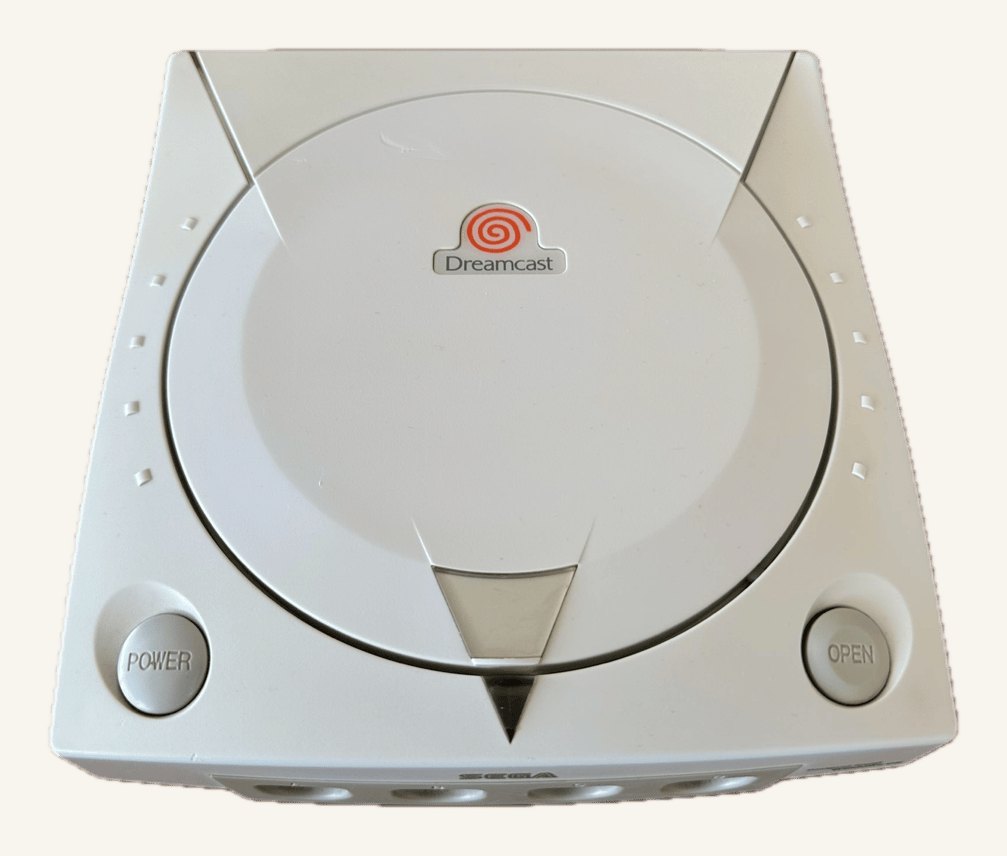
The Dreamcast still feels slightly unreal to me. Sega’s final home console had a short commercial life, and yet the hardware is so good it feels like a machine with unfinished momentum behind it.
Mine came from an unusually lucky find: it was sitting alongside some junk electronics on a Hong Kong roadside, and after some haggling I walked away with it for $12 — the full story is here.
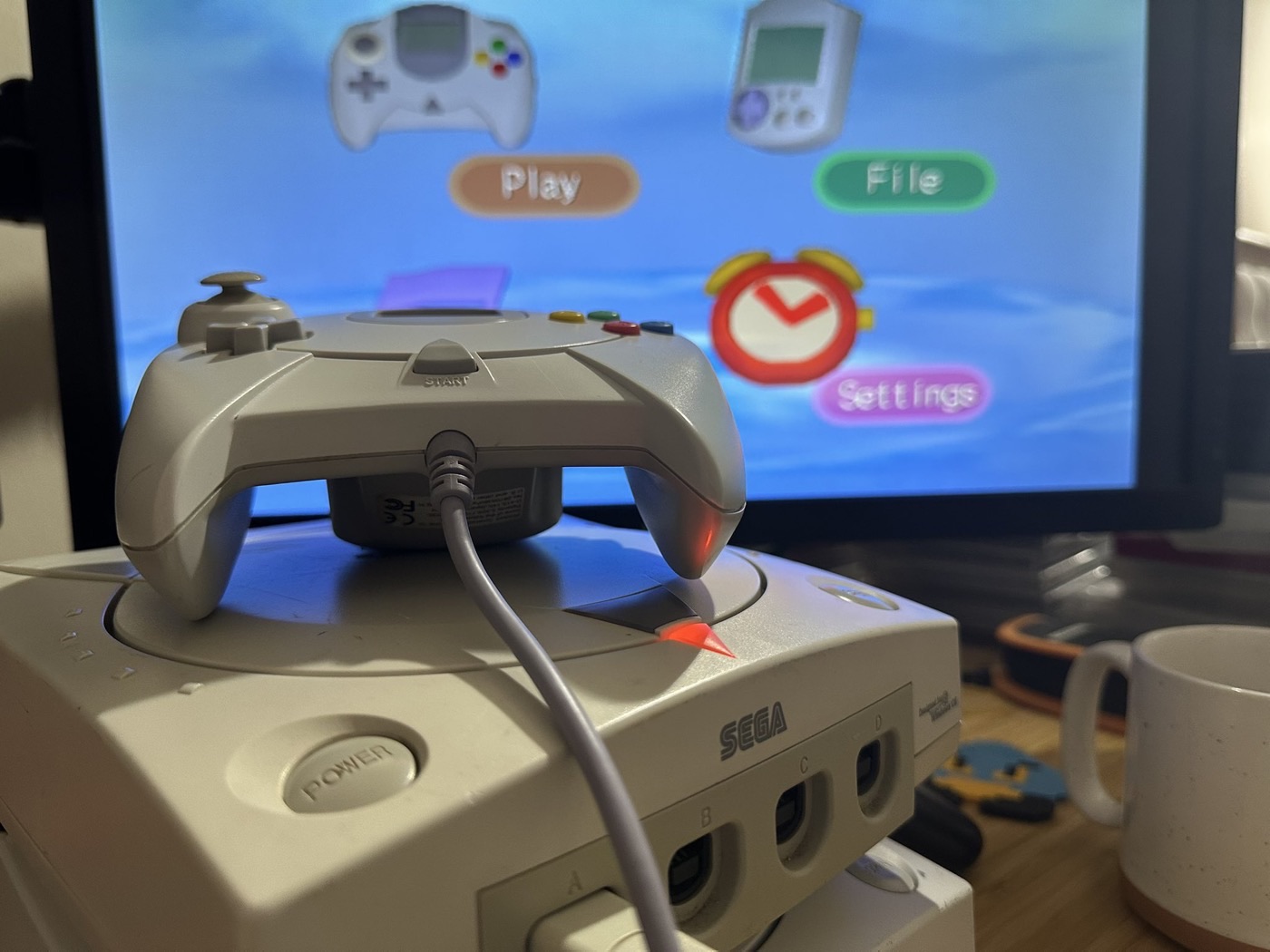
What it is
Sega’s late-1990s console and its last attempt at the home market. It blends arcade energy, clean 3D visuals, distinctive accessories like the VMU, and a library that still feels bold rather than generic.
A regional quirk
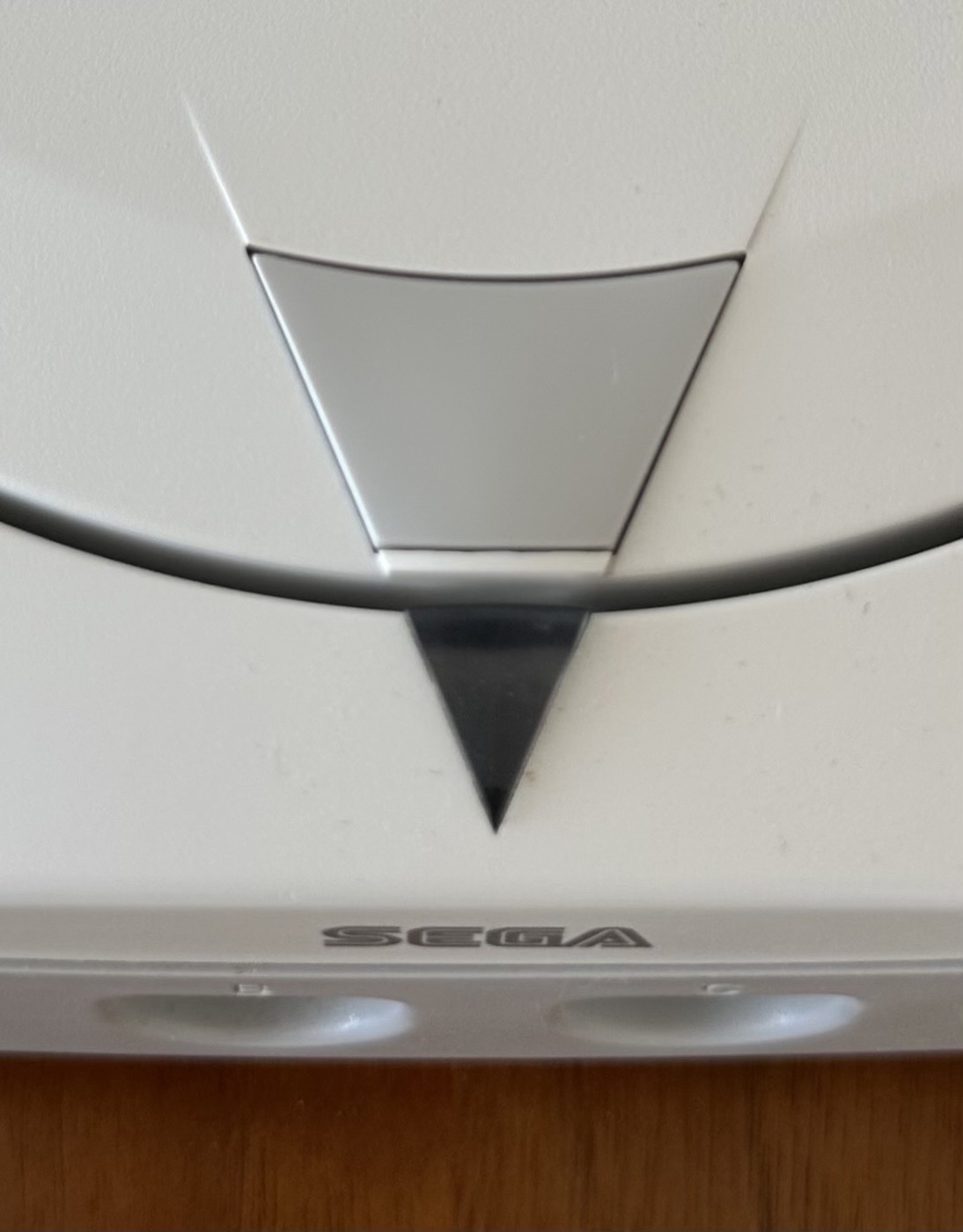
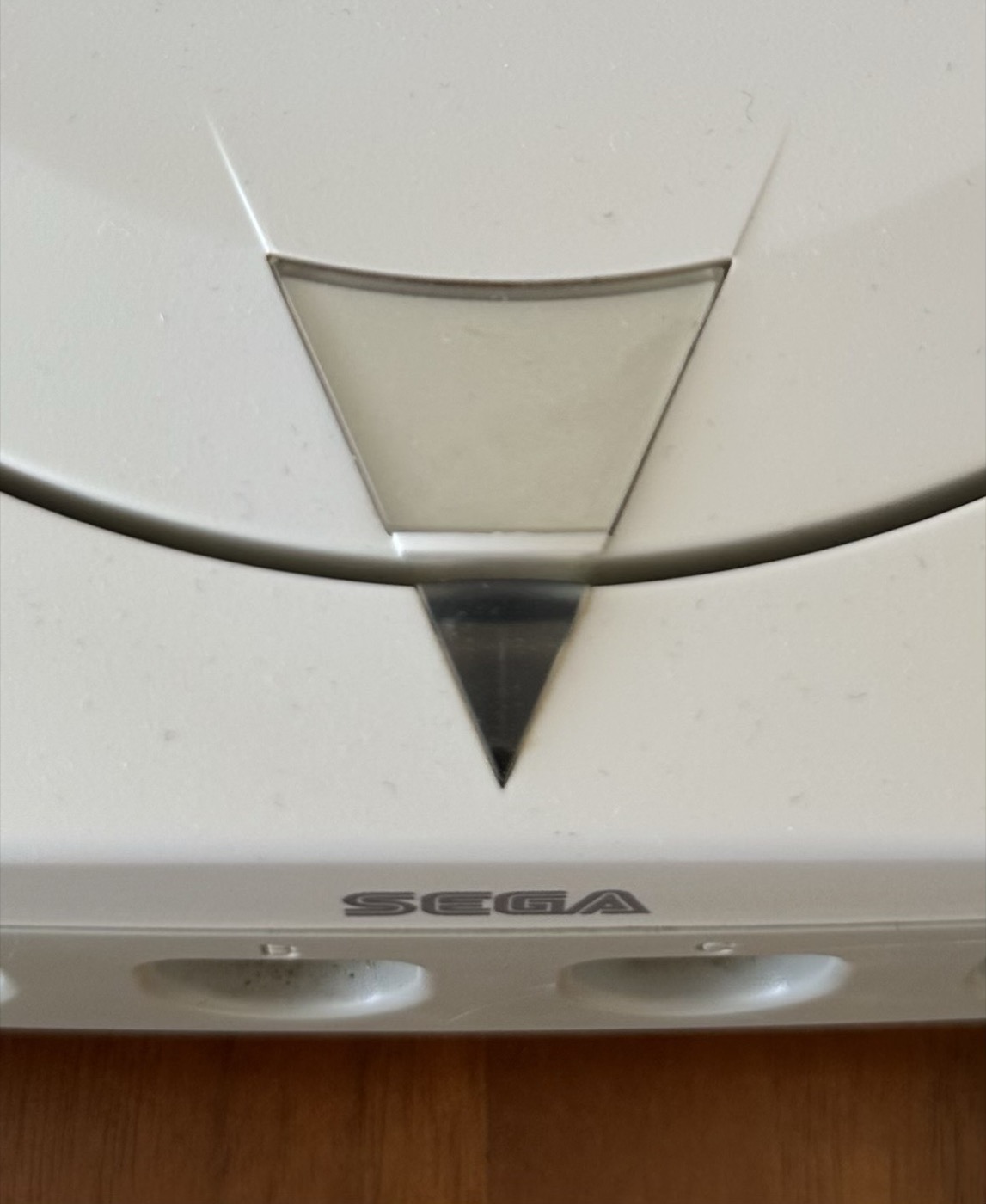
Comparing an NTSC-J (Japan) unit against an NTSC-U (North America) unit turned up a small hardware difference: the triangular badge set into the lid, just above the SEGA logo, is clear/translucent plastic on the Japanese unit, but solid opaque grey plastic (matching the nearby button trim) on the North American one. PAL units are believed to match the NTSC-U treatment, though that’s not personally confirmed.
Why I like it
It’s one of the few consoles from that era that can still look genuinely modern in motion. It’s fast, it’s distinctive, and it’s comfortable to live with — the arcade conversions, the controller feel, and the direct video output are all part of why it works. Emulation is good, but the real thing still makes sense here.
Pros
- deep arcade heritage and confident, stylish software
- 3D games that still hold up visually
- a distinctive platform identity — the VMU, the controller, the whole feel
- fast, readable, and practical as an original-hardware console
Cons
- the short commercial life means a smaller library than its rivals
- it can leave you wishing Sega had had one more generation in it
- a lot of the appeal is tied to liking Sega’s specific style
