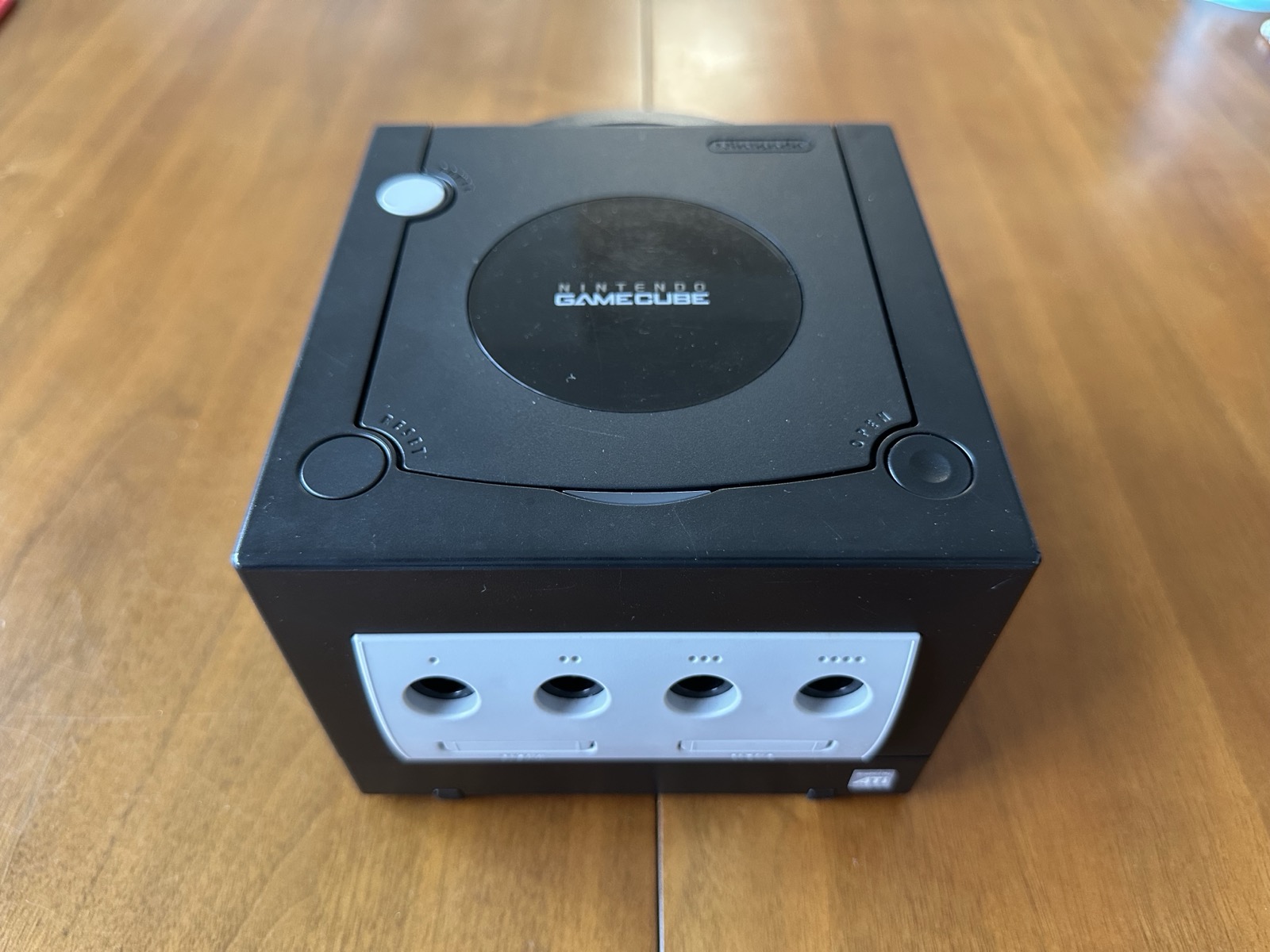
The GameCube gets underrated more than any other Nintendo console. It’s small, it’s oddly shaped, it uses proprietary mini-discs — and underneath all of that is one of Nintendo’s strongest libraries and a surprisingly forward-looking piece of hardware for 2001.
What it is
Nintendo’s cube-shaped follow-up to the N64, notable for swapping cartridges for small optical discs, adding four controller ports and memory card slots as standard, and — on the DOL-001 revision specifically — a digital AV port capable of driving component, progressive-scan, and (via third-party adapters) VGA or HDMI output. Later revisions dropped that port, which makes DOL-001 the one worth seeking out if display options matter to you.
Some DOL-001 units also carry a second serial port (“serial port 2”) that homebrew hardware like an SD2SP2 adapter or a network adapter can use — handy for loading homebrew or playing a handful of GameCube titles online.
Why I like it
The disc format means near-instant load times without cartridge storage limits, the controller (divisive as its layout is) is comfortable for hours, and the four built-in controller ports made it a great couch-multiplayer machine without extra adapters. It’s also aged into a strong modern-hardware platform: optical drive emulators, VGA/component output options, and an active homebrew scene keep original hardware genuinely usable today rather than a museum piece.
Pros
- one of Nintendo’s best first-party libraries, plus strong support from Capcom, Sega and others
- disc-based loading with no cartridge size ceiling, and no CD-length load times either
- four controller ports and memory card slots built in — no adapters needed for couch multiplayer
- DOL-001 revision has genuine digital AV output options, and a healthy modern ODE/mod scene
Cons
- non-DOL-001 revisions lose the digital AV port entirely
- the controller’s layout (single stick, C-stick, asymmetric shoulder triggers) takes some getting used to
- proprietary mini-discs mean no easy off-the-shelf media if the drive fails