Back in 2024, I wrote about a trip to Tokyo, and some Retro Gaming Pickups I found along the way. This is second half of that trip: a guide to the stores themselves — what each one is actually good for, how the prices compare, and where to watch out for tourist pricing.
The prices are as I found them back then, converted at roughly ¥154 to the dollar — the rate at the time.
Akihabara
Super Potato
The famous one — and the pricing shows it. Great selection, but firmly tourist prices. Spread across multiple small floors, with some genuine “holy grail” finds along the way, including an NES/SNES switcher unit, and an arcade upstairs.
Here’s the concrete version of “tourist prices”. This is a loose Nintendo 64 with a yellow controller, with a sticker grading the 3D stick as 良好 — “good” — at ¥14,850 (about $96):
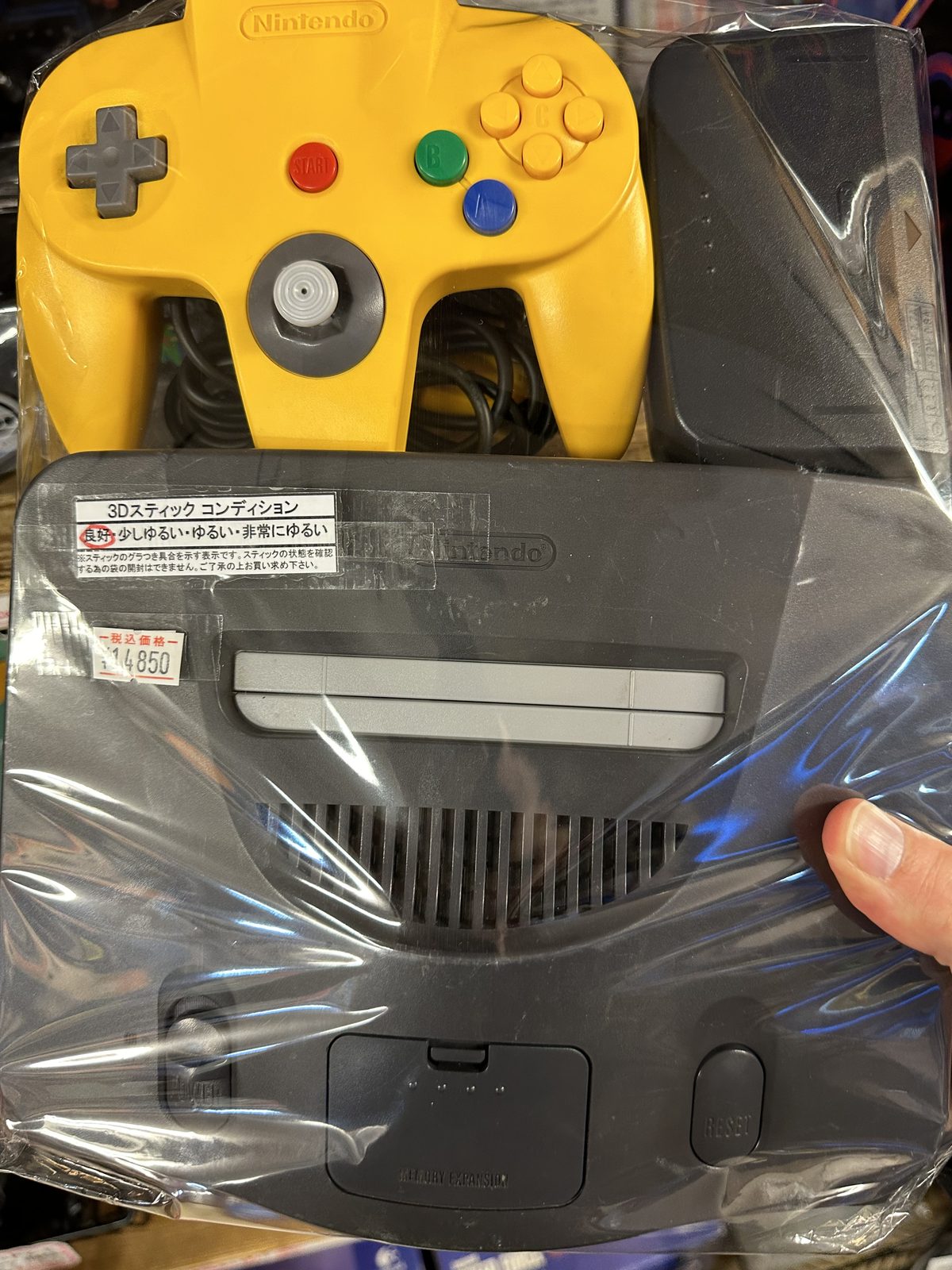
A few hours later I bought a comparable N64 and controller at BEEP for ¥6,950 (about $45). Same console, less than half the price, about a ten-minute walk away.
The Saturns told the same story. This one is loose, unboxed, and has yellowed badly — ¥11,880 (about $77):
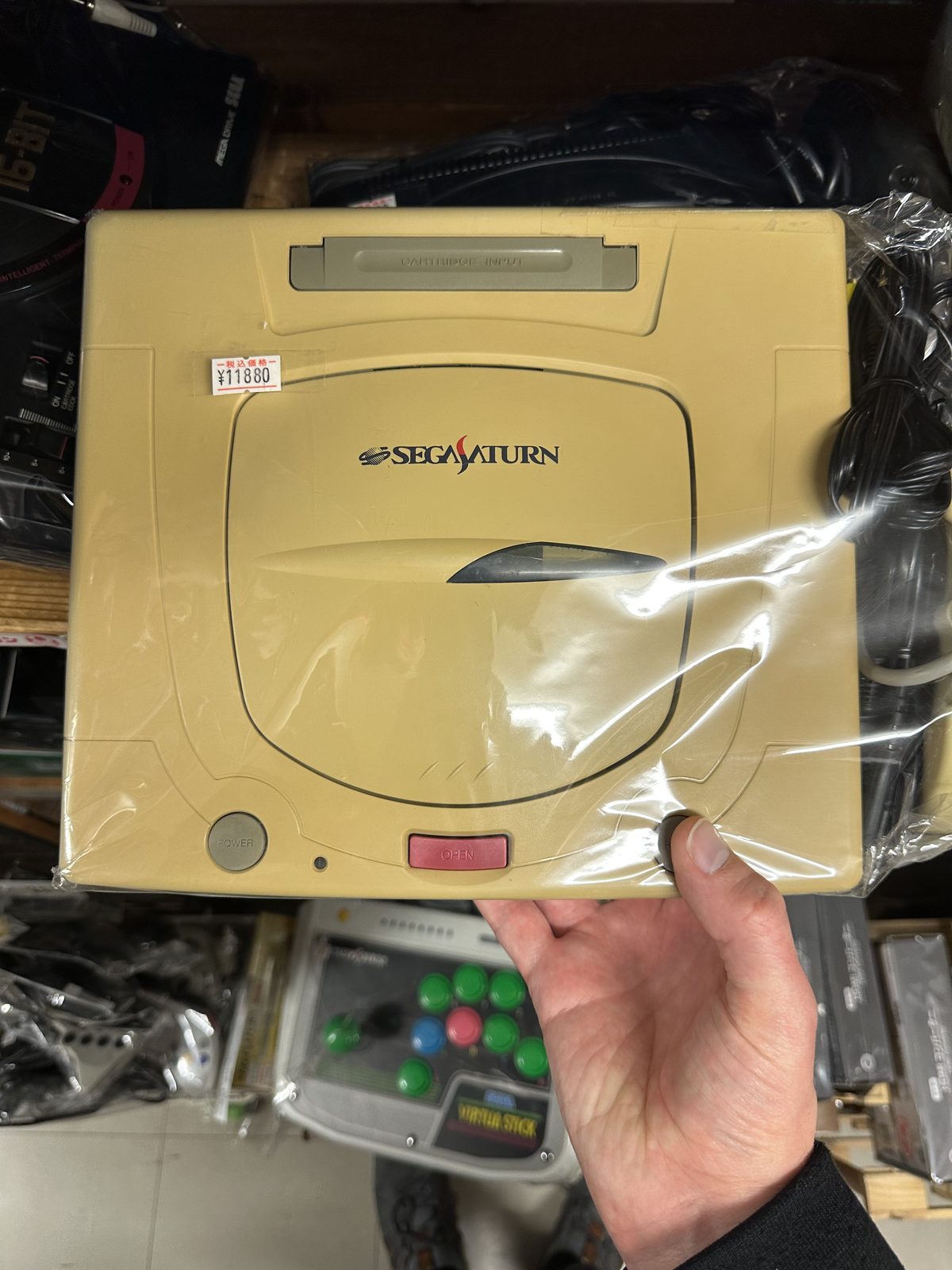
For not much more than that, I later picked up a boxed one in Shinjuku.
Book Off
Less a dedicated games shop, more a large secondhand store that happens to carry a huge number of games. The ground floor is packed with used PS2, PS3, Vita, and Wii titles sitting alongside modern releases — genuinely enormous stock, and prices here beat Super Potato. The retro-specific side is thinner, though: N64 is very small, SNES only a little better, and hardware is close to nonexistent beyond a few handhelds. The upper floors make up for it with a huge amount of anime and manga.
Retro Game Camp
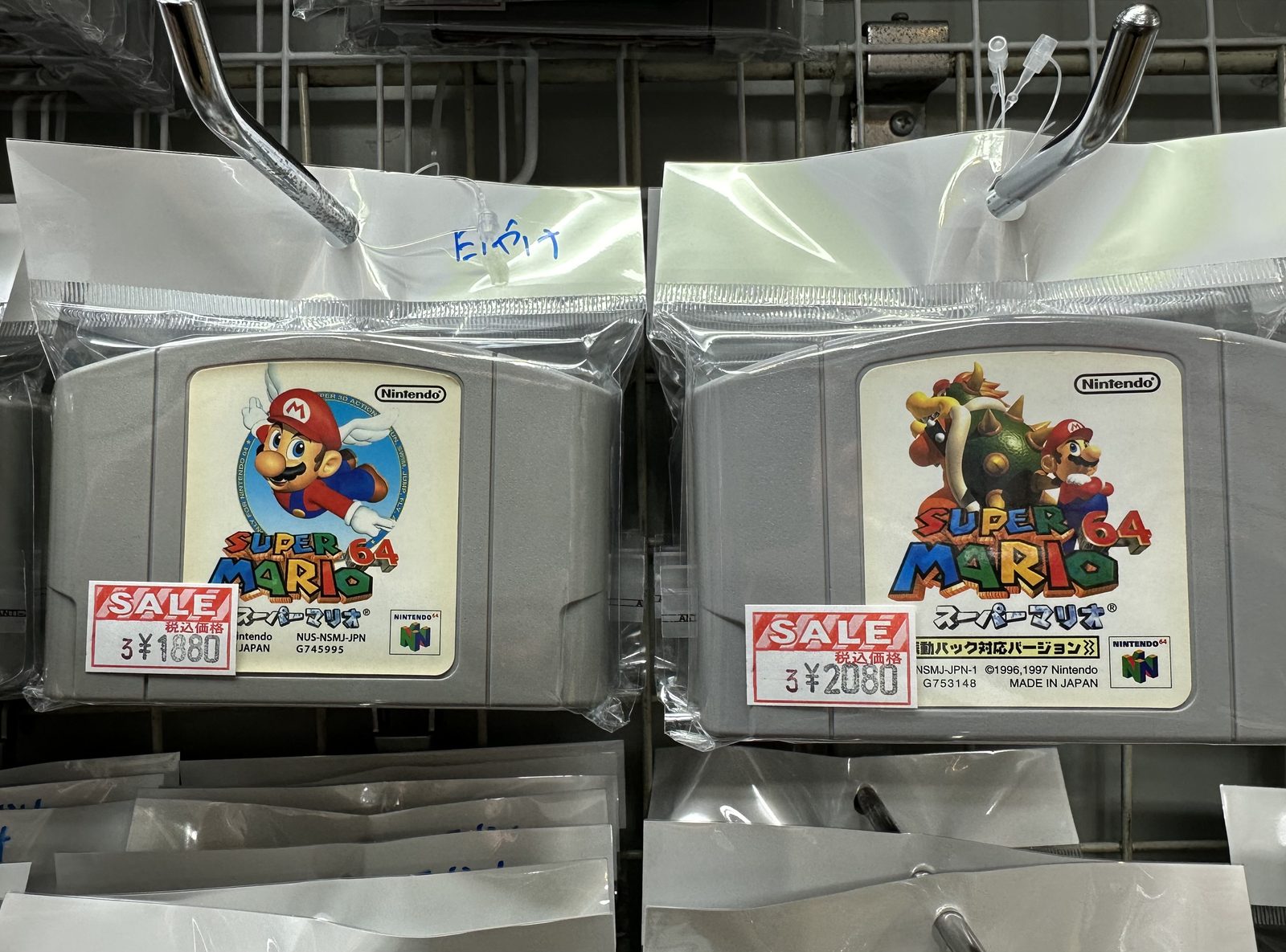
A small, two-floor store, clearly well organized and well cared for. Prices land between Super Potato and the cheaper end of the scale (Surugaya, BEEP). Strong on the “mainstream” consoles — plenty of N64, Famicom, PlayStation, and Saturn, all bagged and ready to go — and the software pricing is where it really shines. The two Super Mario 64 carts at the top of this post were ¥1,880 and ¥2,080 (about $12 and $13.50), and I picked up Wave Race here for ¥800 (about $5.25).
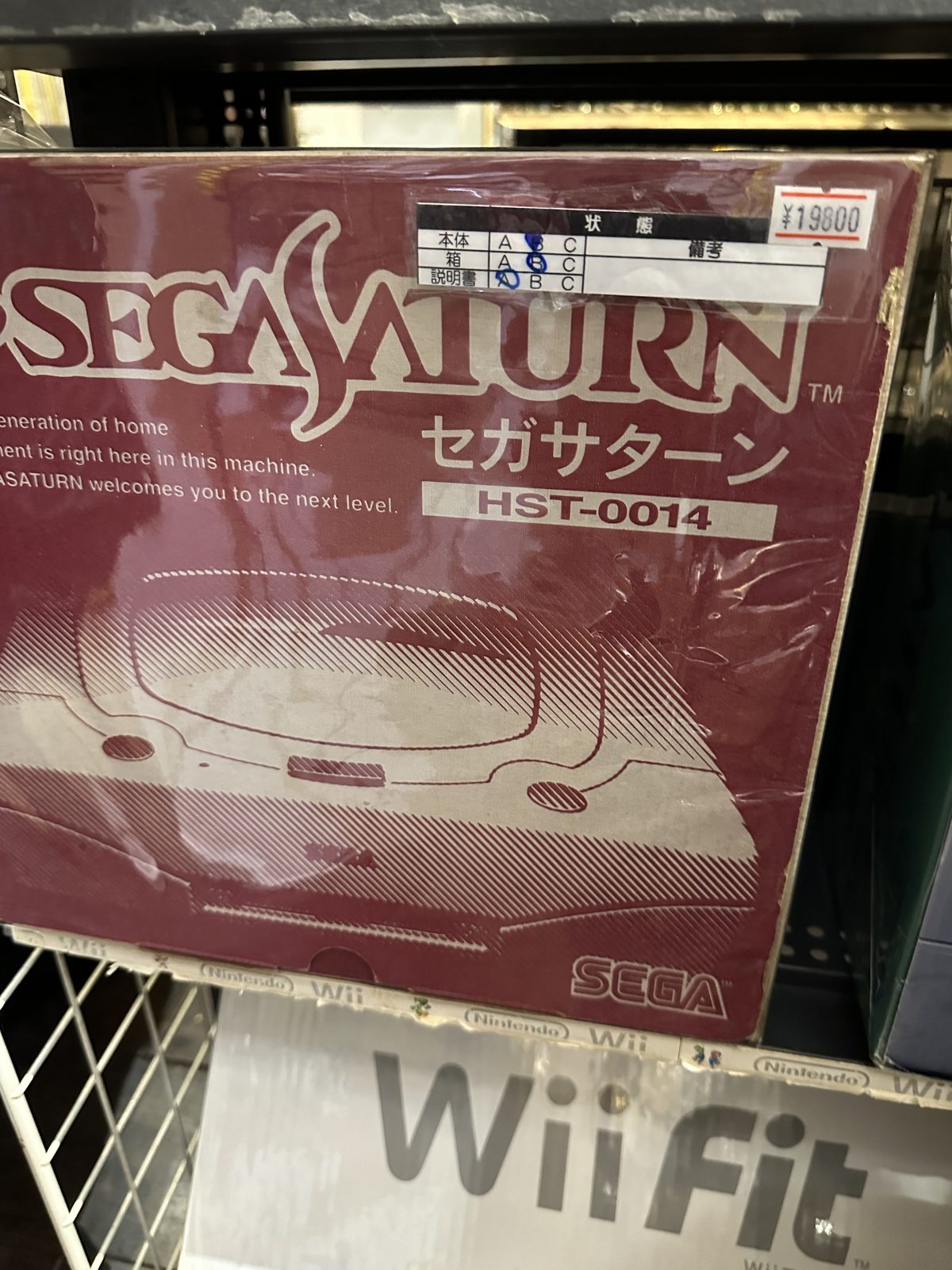
Hardware is less consistently a bargain. This boxed Saturn was ¥19,800 (about $129) — the most expensive of the three I looked at on the trip:
BEEP
A small basement store, but the best of the bunch for arcade gear and hardware. This is where I picked up my Nintendo 64 — ¥6,950 (about $45) for the console and a controller, plus ¥680 (about $4.50) for a second one.
BEEP is also the best place I’ve found anywhere for genuine Japanese retro computing — MSX, PC-88, PC-98, X68000, FM Towns, the machines that mostly never left Japan. This was easily my favourite part of the whole adventure, so here’s the lot of it.
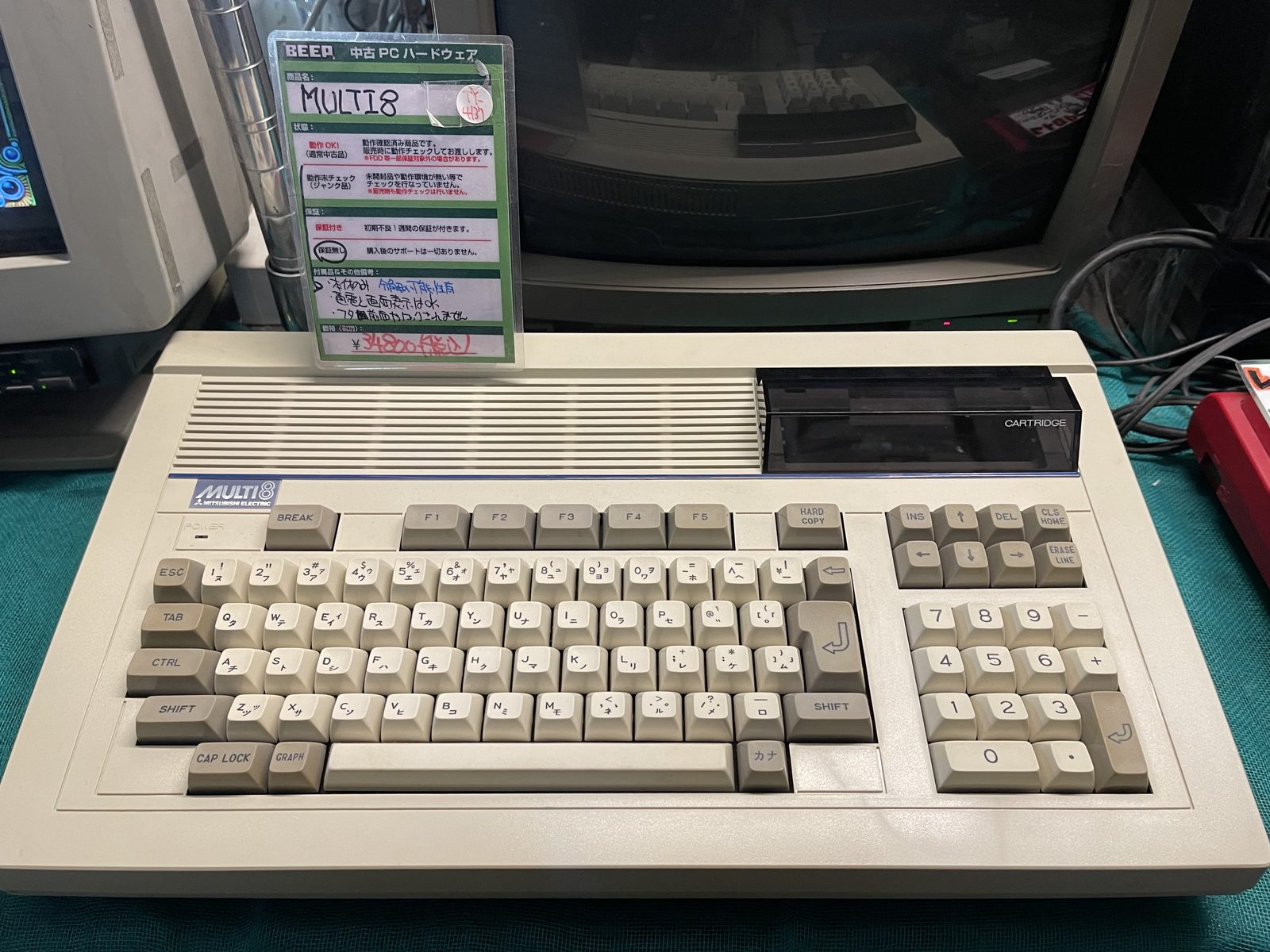
Everything is tagged with the store’s own condition card, which states whether the item has been tested, whether it carries a warranty, and what’s included. This Mitsubishi MULTI8 was ¥34,800 (about $226):
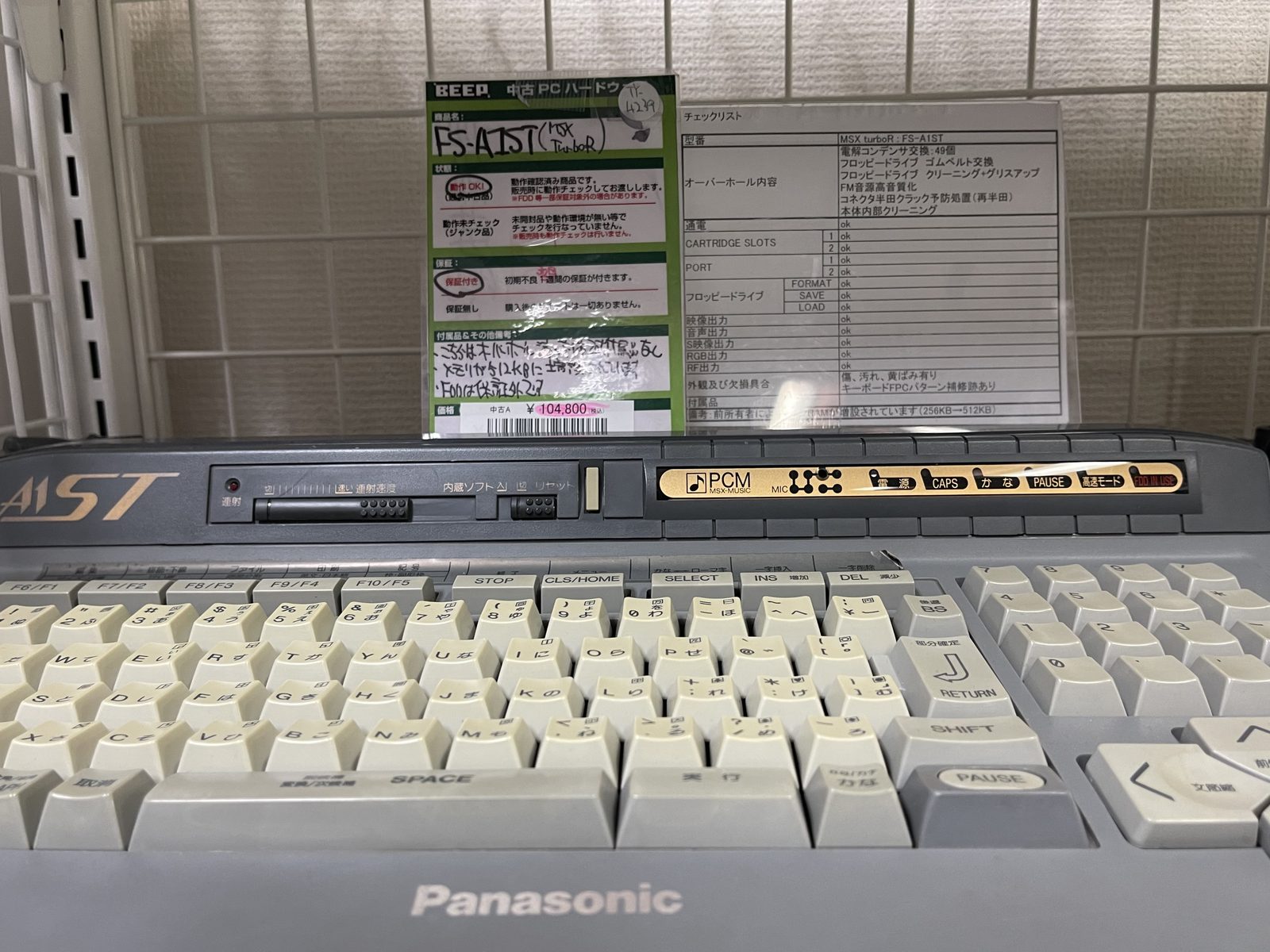
What sets BEEP apart is that the serious machines come with a full overhaul sheet — a printed checklist of exactly what was replaced and what was tested. This Panasonic FS-A1ST, the MSX turboR, had 49 electrolytic capacitors replaced, a new floppy drive belt, the drive cleaned and re-greased, the FM sound circuit improved, and preventative re-soldering on the connectors. The checklist then works through every cartridge slot, port, and video output individually. It was ¥104,800 (about $680) — the most expensive thing I saw in the shop, and given the work documented on that card, not unreasonable:
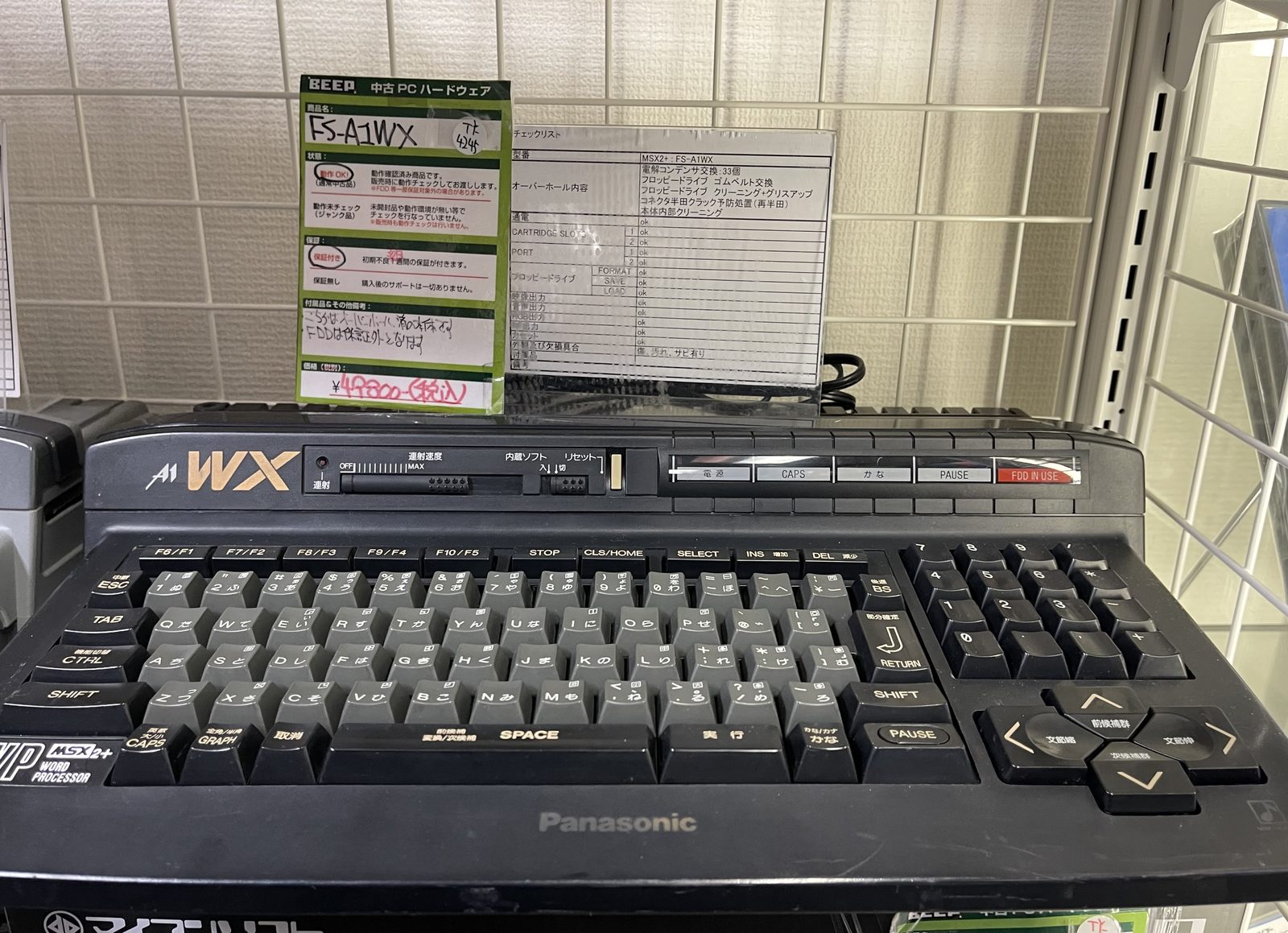
Its stablemate, the MSX2+ Panasonic FS-A1WX, had the same treatment with 33 capacitors replaced — ¥47,800 (about $310):
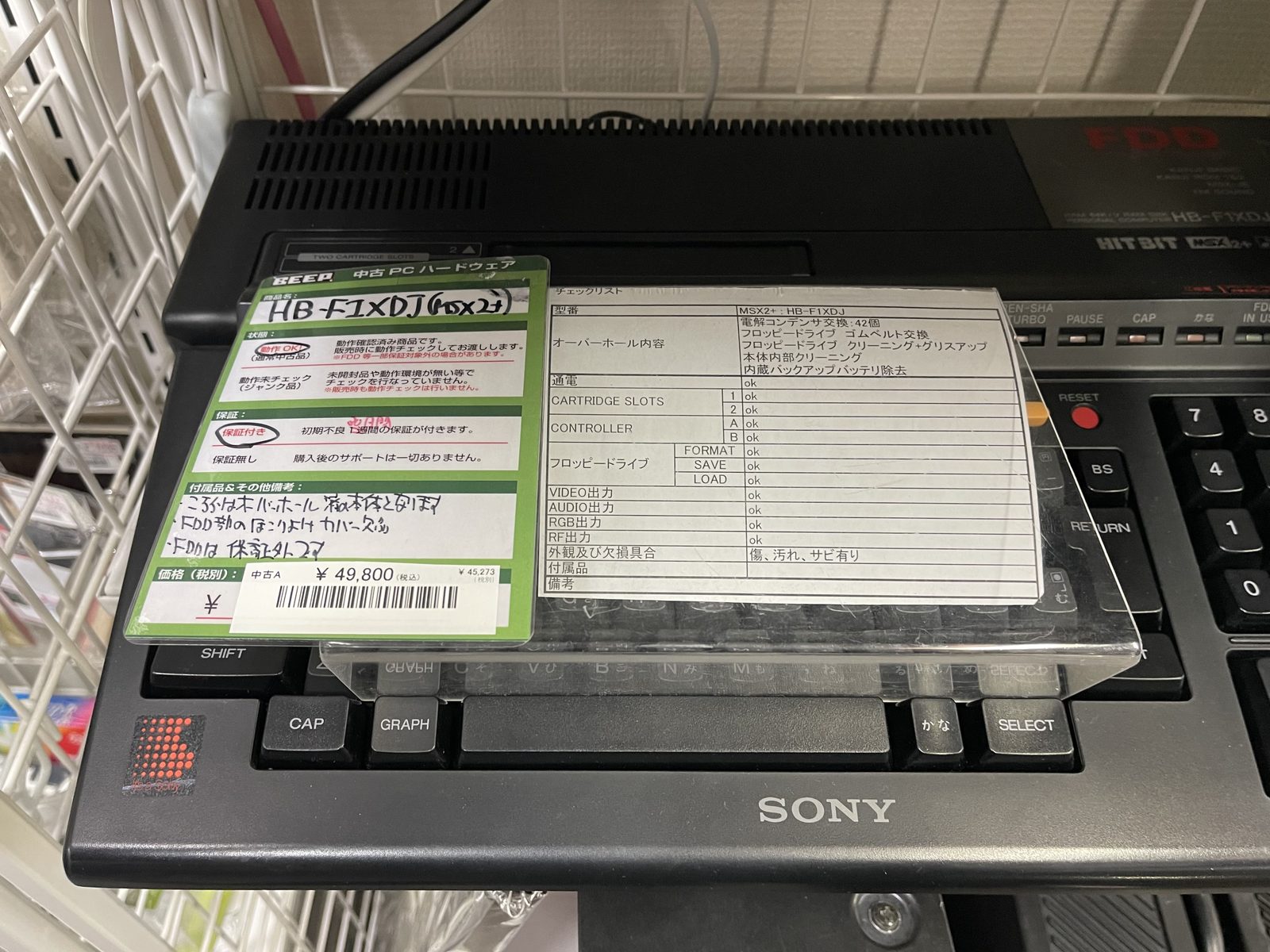
And the Sony HB-F1XDJ, also MSX2+, with 42 capacitors replaced and the internal backup battery removed — a sensible thing to do before it leaks — at ¥49,800 (about $323):
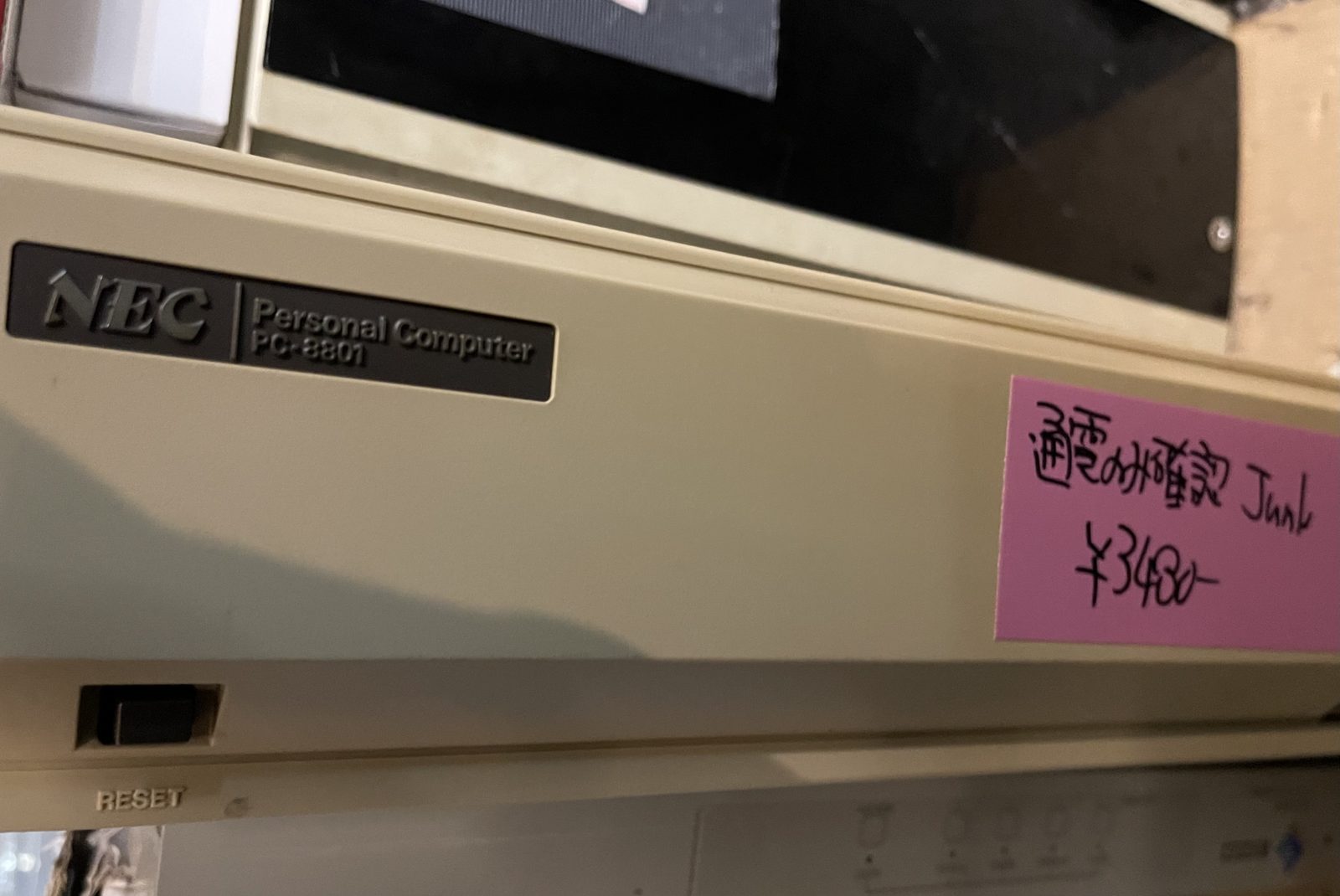
Not everything is restored to that standard, and the pricing reflects it. This NEC PC-8801 was tagged as junk — powers on, nothing else checked — for ¥3,480 (about $23). If I had the luggage space, I would have absolutely picked it up:
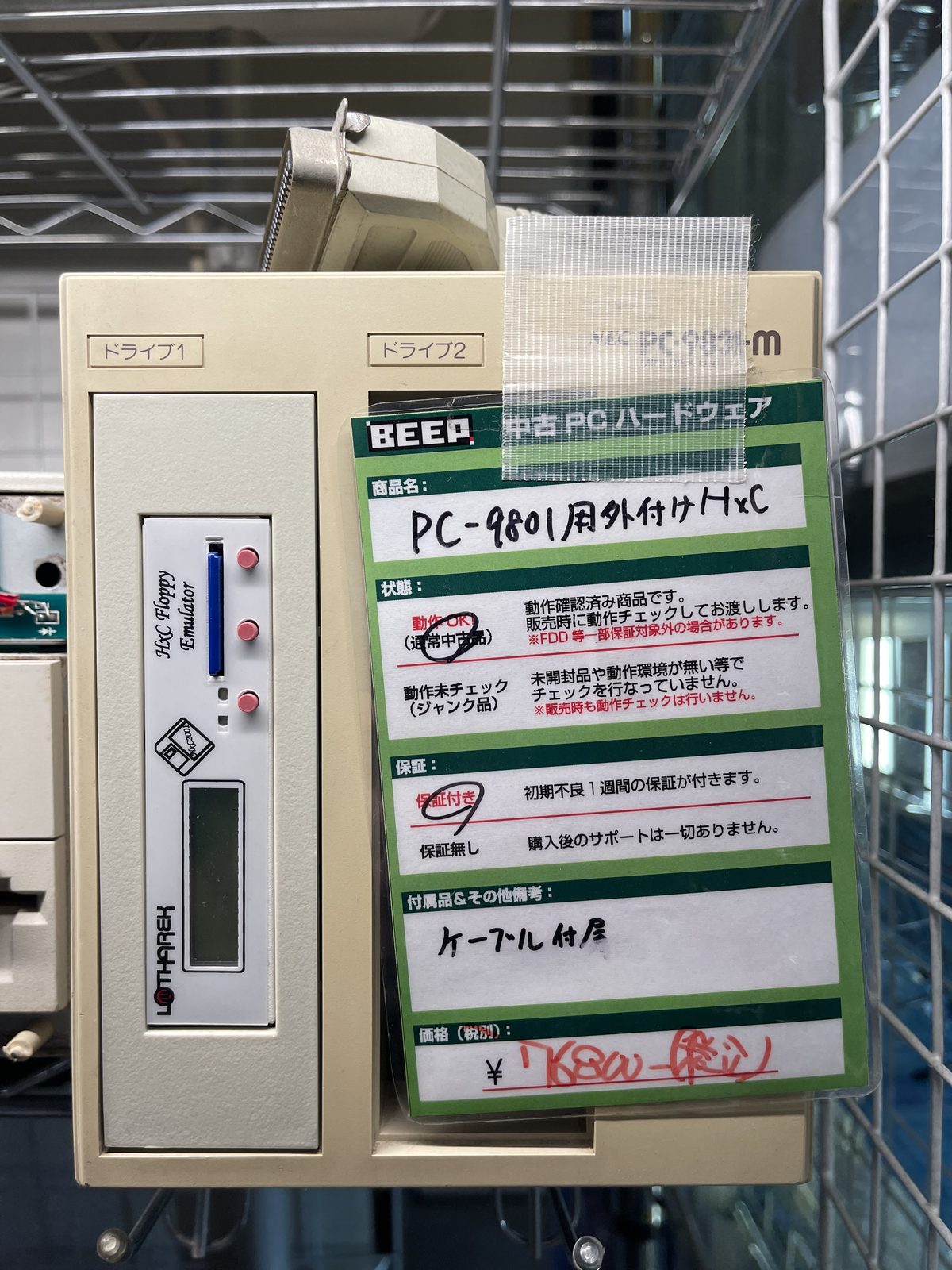
There’s modern kit for these machines too, not just the originals. This is a Lotharek HxC floppy emulator in an external enclosure for the PC-9801, cable included, at ¥16,800 (about $109) — the sort of thing that makes actually using one of these far less painful than feeding it forty-year-old floppies:
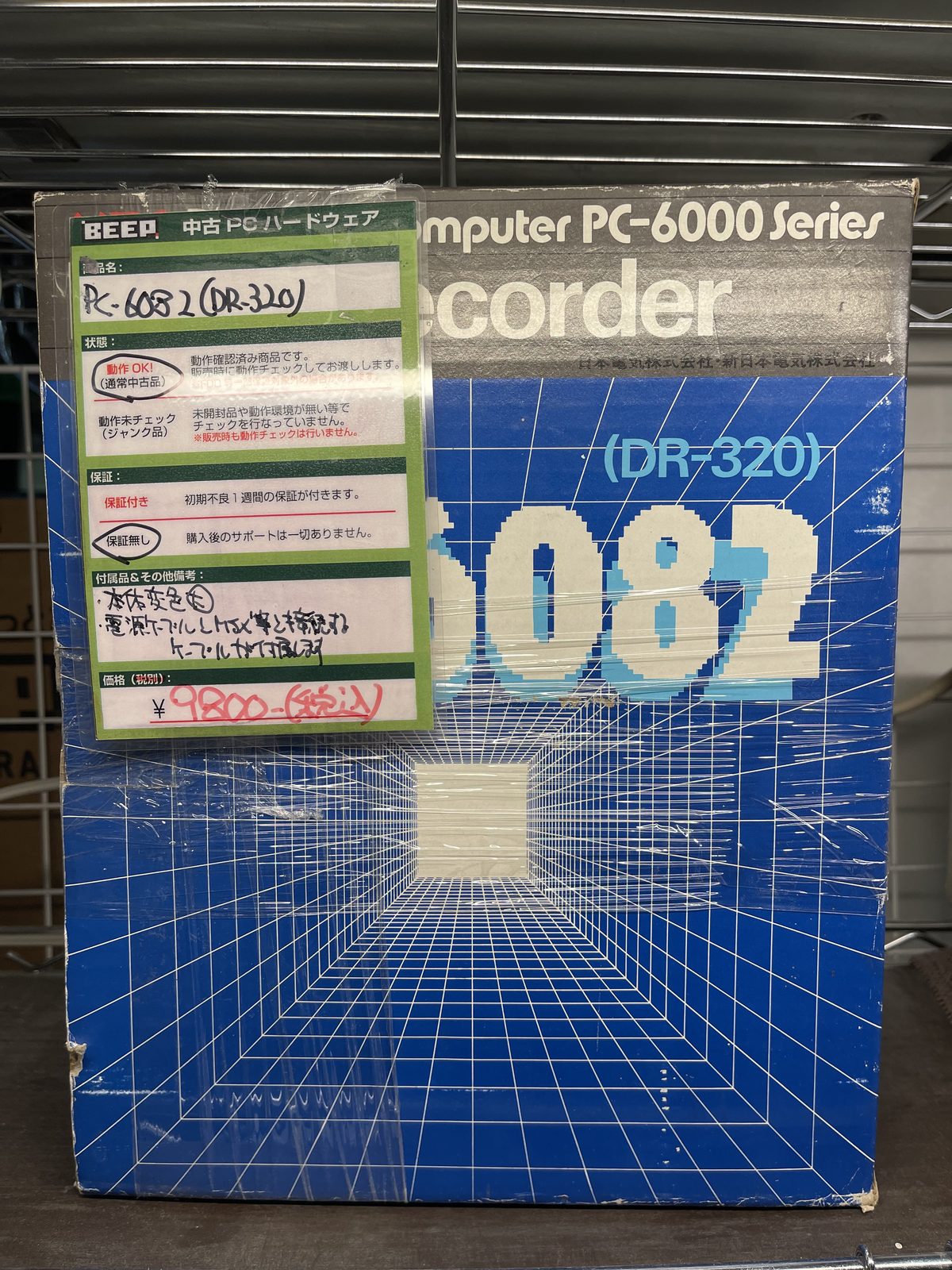
Boxed peripherals turn up as well, like this NEC data recorder for the PC-6000 series, at ¥9,800 (about $64):
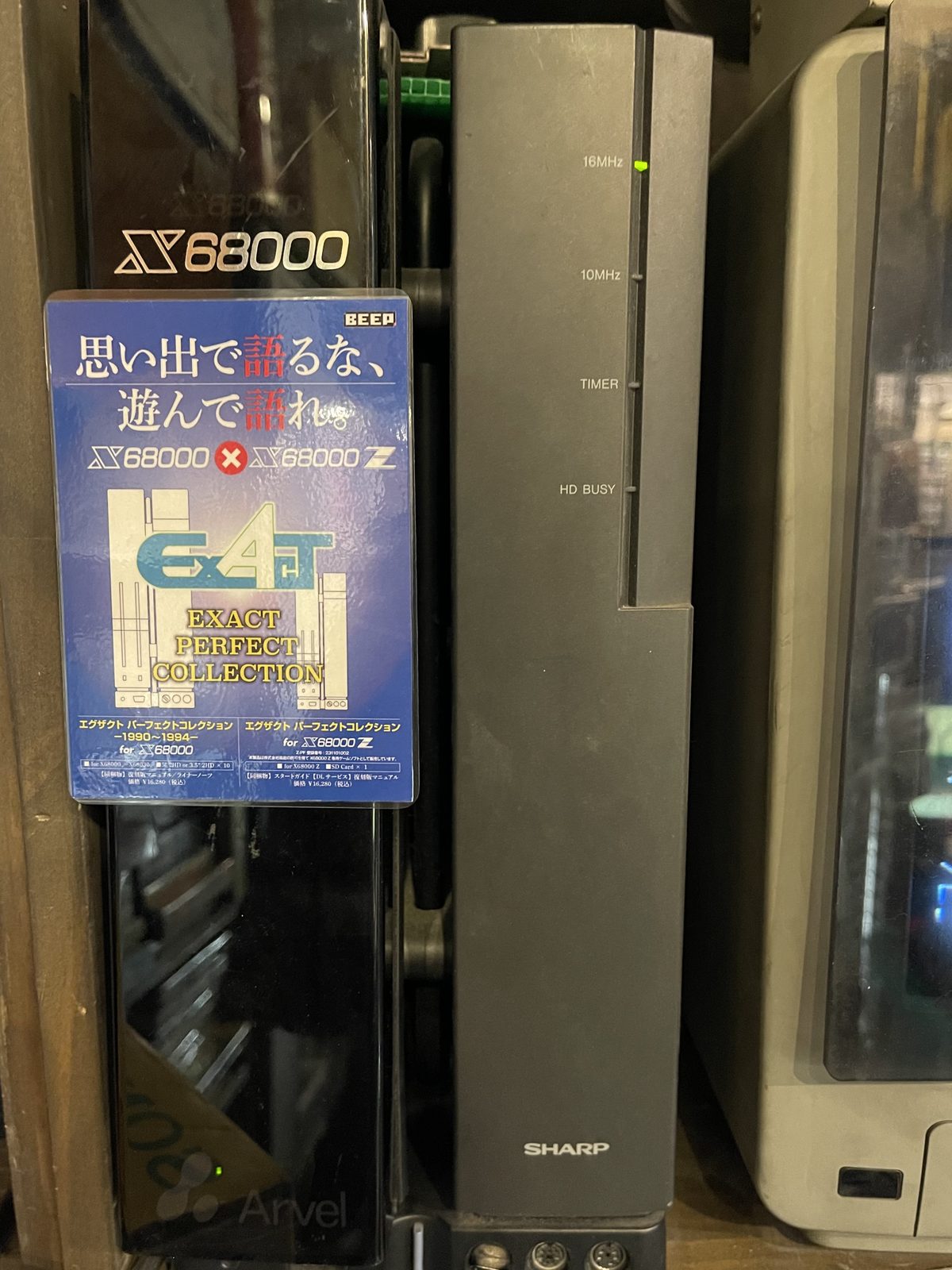
These Sharp X68000s were displayed alongside a promo card for the Exact Perfect Collection — a modern software bundle covering both the original X68000 and the X68000 Z:
And they don’t just shelve this stuff — there was a Fujitsu FM Towns set up and running a demo-loop on its matching monitor:
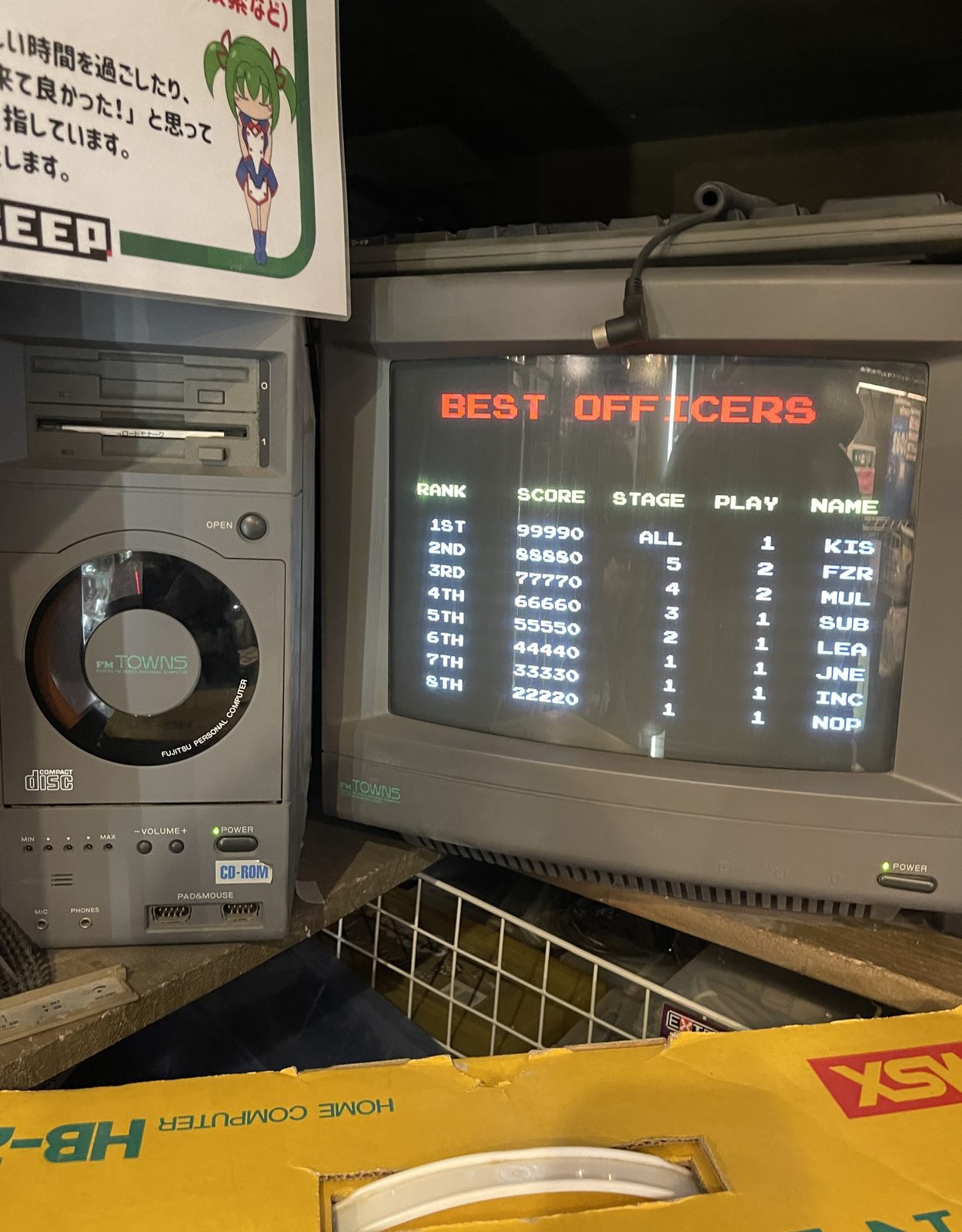
One important update in 2026: BEEP is no longer at this basement address. The building was demolished, and the shop reopened on 6 June 2026 at SEEKBASE AKI-OKA MANUFACTURE Building 3 — under the railway viaduct between Akihabara and Okachimachi stations. By all accounts it’s now a larger, ground-level space, so the cramped basement I’ve described above is history. It’s open 11:00–20:00 daily except Wednesdays.
Surugaya (Akihabara branch)
The video game section here is tiny, tucked into the basement. What it lacks in size it makes up for in quality — some really nice specialty items, mint boxed copies of rare and limited-edition games, and good prices. Not the place to go if you want mainstream retro consoles or hardware in volume, though.
Shinjuku
Surugaya (Shinjuku branch)
A much bigger branch, on the 5th floor of a shopping mall, with a noticeably larger video game section than the Akihabara store. Prices are good — maybe marginally higher than Akihabara — but the extra selection more than makes up for it. This is where I picked up the boxed Saturn from the pickups post, for ¥14,800 (about $96) — ¥13,455 (about $87) after the tax rebate.
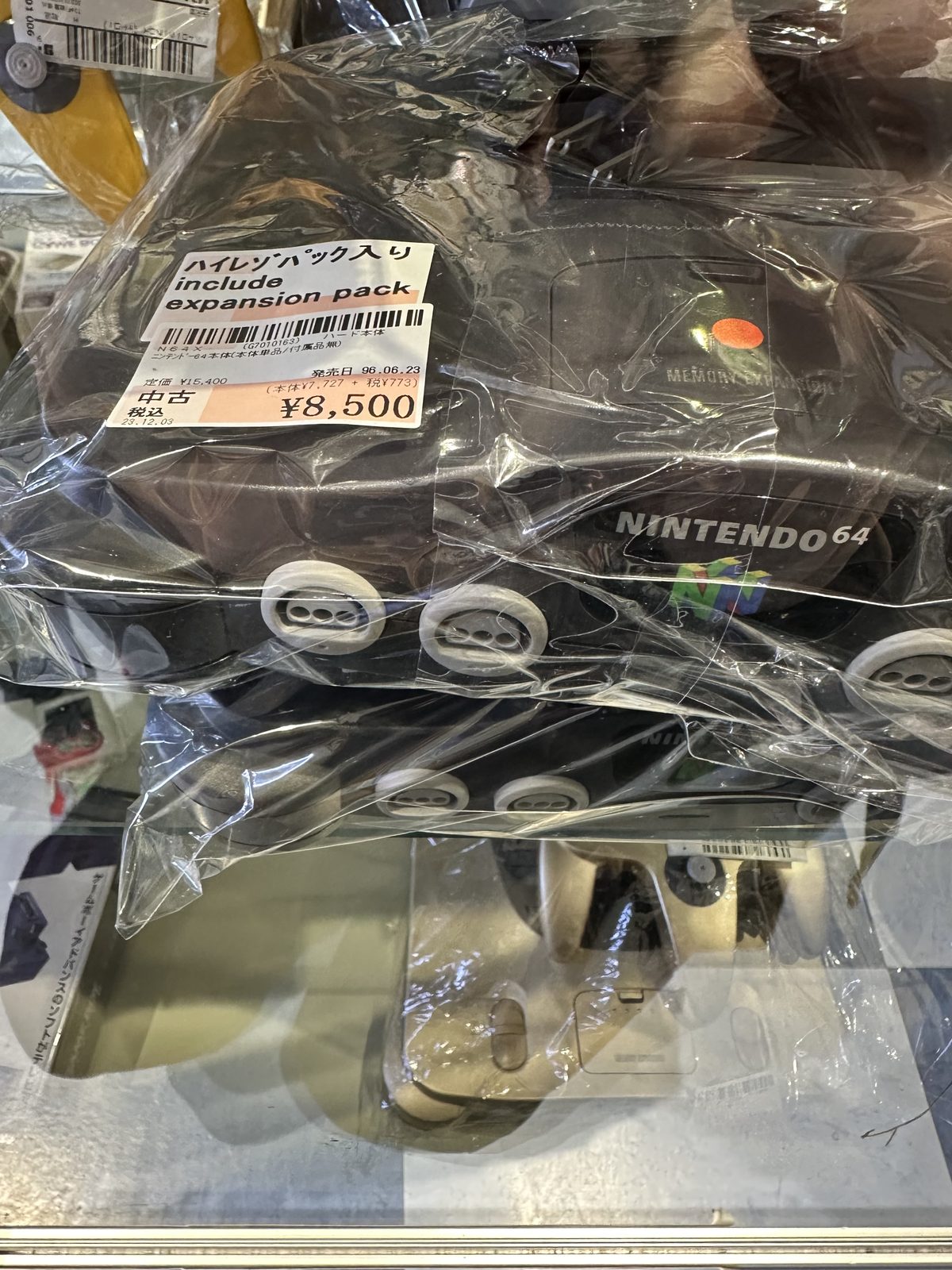
Their N64s were keenly priced too. This one came with the Expansion Pak for ¥8,500 (about $55), with the original ¥15,400 retail price printed on the tag for comparison:
The same console, three prices
Worth laying out side by side, because this is the entire argument for shopping around:
| Item | Store | Price |
|---|---|---|
| Nintendo 64 + controller | Super Potato | ¥14,850 ($96) |
| Nintendo 64 + Expansion Pak | Surugaya (Shinjuku) | ¥8,500 ($55) |
| Nintendo 64 + controller | BEEP | ¥6,950 ($45) |
| Sega Saturn, loose, yellowed | Super Potato | ¥11,880 ($77) |
| Sega Saturn, boxed | Retro Game Camp | ¥19,800 ($129) |
| Sega Saturn, boxed | Surugaya (Shinjuku) | ¥14,800 ($96) |
All on the same day, and — for the Akihabara stores — within about a ten-minute walk.
One more stop: Tsukumo
Worth a mention even though it’s more PC-parts than games: Tsukumo PC Main Store, Reuse Hall, the only secondhand specialty store in Tsukumo, Akihabara. The first floor has a wide range of used PCs and monitors — everything from business machines with office software to gaming rigs — plus secondhand iPhones. The second floor is junk/parts territory: used CPUs, motherboards, memory, and graphics cards.
Set expectations accordingly, though: this is the place for cheap fairly modern kit — think 2010 and newer — rather than true 80s and 90s retro. If you’re after a Pentium-era motherboard or an ISA sound card, this isn’t the stop. If you want a serviceable used workstation or a bargain graphics card, it very much is.
The takeaway
The sheer selection across these stores is genuinely amazing — worth the trip just to browse. But prices vary wildly from store to store, and it pays to know that going in. Super Potato is the clearest example of tourist pricing; Book Off, Retro Game Camp, BEEP, and Surugaya are all, in their own way, better value if you know what you’re looking for.
Related on this site
- Tokyo Retro Gaming Pickups — what I actually came home with
- Sega Saturn
- Nintendo 64