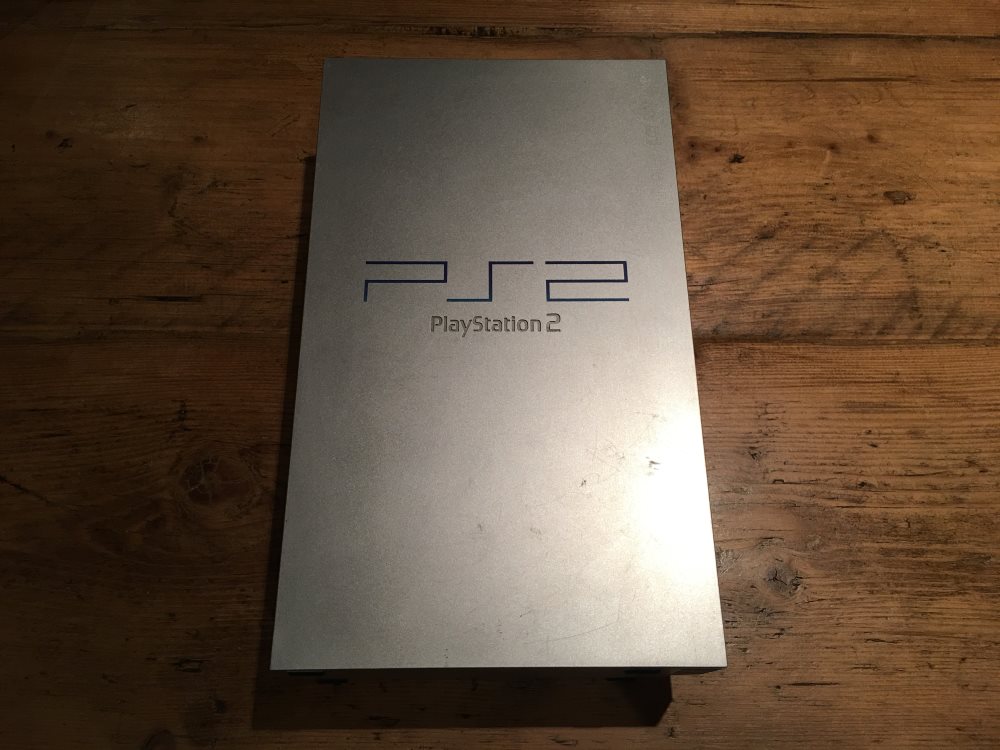
The PlayStation 2 is a console I lived with properly. Mine came with me to university and ended up at the centre of a lot of multiplayer nights — Gran Turismo 3 and Pro Evolution Soccer especially — and over the years I accumulated far too many accessories, adapters, and VGA gadgets trying to make it fit whatever screen setup I had at the time.
What it is
Sony’s hugely successful sixth-generation console, with one of the deepest libraries ever made and backward compatibility with the original PlayStation.
Why I care about the hardware
More than most consoles, the PS2 experience changes with the display chain. I’ve spent years trying it on CRTs, VGA adapters, scalers, and odd video paths, and the difference is large — the PS2 can look far better than people remember, but usually not by pushing it through a random modern flat panel. It’s a machine where the right display choice really matters, and where controller feel, timing, and interlaced video are all part of why some PS2-era games make more sense on the real thing.
The fat PS2 also has an i.LINK (FireWire) port, which a handful of games use to link consoles together — most memorably Gran Turismo 3 and 4, which can drive three screens as one wide view from three linked machines. That whole rabbit hole is written up in Gran Turismo 3 on Multi Monitors.
Pros
- an enormous library, plus original PlayStation backward compatibility
- a genuinely fun accessory and multiplayer ecosystem
- very rewarding if you enjoy displays, cables, and video-quality tinkering
Cons
- video setup is more involved than most people expect
- interlaced output looks rough on the wrong display chain
- often looks worse on a random flat panel than on a carefully chosen setup