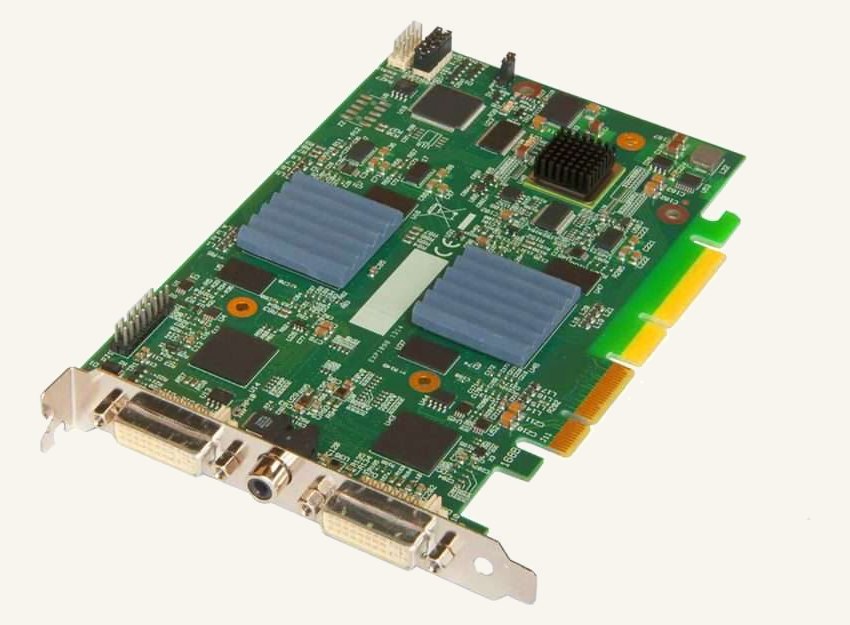
Most modern capture cards assume everything coming in is digital HDMI. That’s a problem when the thing you want to capture is an SNES, a PS1, or a PS2 — genuine analog video, often in modes like 240p and 480i that budget capture hardware handles badly or not at all. Rather than buy an expensive dedicated scaler, I went looking at cards built for a completely different market.
Why this card
Datapath cards kept coming up in the retro-capture community with specific, credible praise — not vague “good reviews” but dedicated coverage. RetroRGB’s review is built around its 480i capture quality, and Nerdly Pleasures independently lands on the same card family as the serious answer for analog retro capture.
Worth knowing going in: these cards were designed for video walls and commercial AV installs, not retro gaming. Direct 240p capture has real quirks as a result — it needs precise phase configuration to get clean results, so it’s not quite plug-and-play for that specific mode, even though the output is excellent once it’s set up.
Specifications
| Component | Details |
|---|---|
| Inputs | 3 independent, simultaneous capture channels: 2× HD-capable DVI-I (each handling HDMI, DVI, RGB, or analog Component/YPbPr directly) plus 1× Composite Video for standard-def sources |
| Resolution | Up to 4096×4096; up to 1080p at 60fps on the HD inputs |
| Interface | PCIe, full 16-lane physical connector, notched to fit x4/x8/x16 slots |
| Audio | Embedded HDMI audio capture, plus an optional AM2 module for balanced/unbalanced analog audio |
The two DVI-I inputs are the flexible ones — a simple adapter gets VGA or component video into them, since DVI-I already carries the analog RGB/component signal directly, just on a different connector.
The verdict
It works genuinely well, and the bundled software is solid. Two honest caveats: per RetroRGB’s testing, the audio capture is fine for streaming or webcam-style use but not quite archival grade — capture audio separately if that matters — and the video-wall heritage means 240p specifically needs careful phase tuning rather than working out of the box.
Mine, like most on the secondhand market, arrived without its PCIe bracket — the metal plate that holds the connectors in place at the back of the case. That’s why these turn up cheap: it’s purely a mounting part, not functional, and replacement brackets are easy to source.
